


The franchise industry continues to experience substantial growth in 2025, reflecting the evolving business landscape, technological advancements, and consumer expectations. Franchising remains a vital vehicle for entrepreneurship, allowing new and existing brands to expand rapidly while providing standardized products and services to consumers nationwide. This comprehensive overview examines the current state of franchise growth, identifies key sectors driving expansion, highlights successful case studies, and explores the future of franchising with a focus on innovation, technology, and market opportunities.
Franchise Industry Overview: 2025 Growth Projections
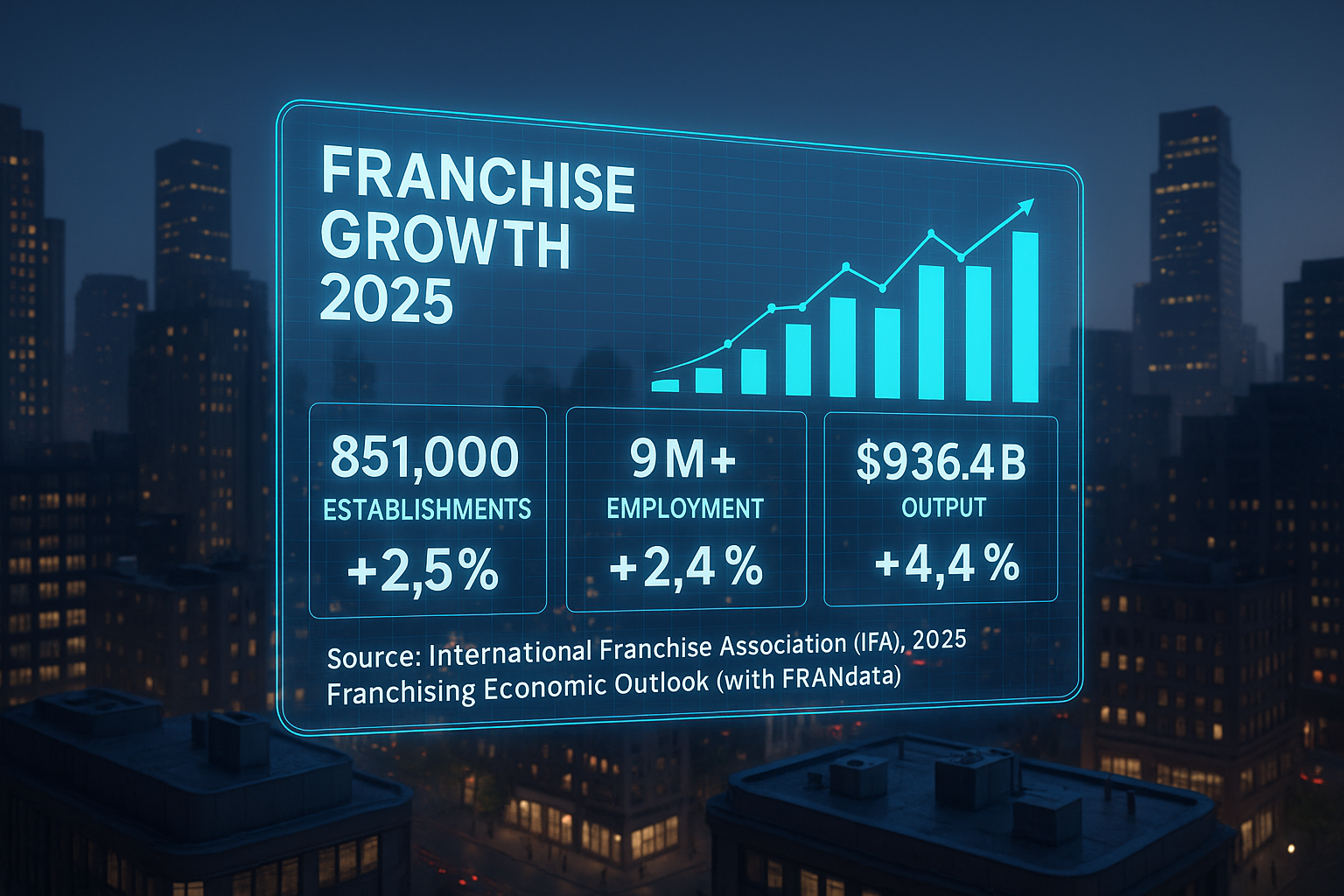
Franchising has proven resilient even amid economic fluctuations. According to the International Franchise Association’s 2025 Franchising Economic Outlook, the following projections indicate a positive trajectory for the sector:
- Franchise Establishments: Expected to increase by more than 20,000 units, or 2.5%, reaching a total of approximately 851,000 establishments.
- Franchise Employment: Projected to grow by 2.4%, adding around 210,000 jobs, bringing total franchise employment to more than 9 million.
- Franchise Output: Anticipated to exceed $936.4 billion, marking a 4.4% increase from the previous year.
These figures emphasize that franchising continues to outpace the broader economy, offering opportunities for entrepreneurs seeking lower-risk entry into established business models. Franchising has proven particularly effective in addressing market gaps, supporting job creation, and introducing innovative business concepts to consumers.
Sources: https://www.franchise.org/franchising-economic-outlook/, https://shorturl.at/MQSH5
Key Factors Driving Franchise Growth in 2025
Several factors are fueling franchise expansion and shaping industry dynamics in 2025:
1. Consumer Demand for Convenience and Quality
Today’s consumers prioritize convenience, quality, and reliability. Franchises that provide consistent service and products while offering efficient delivery, drive-thru options, and digital ordering platforms are capturing market share more effectively.
2. Technological Advancements and Automation
Technological integration is critical for franchise success. From AI-driven customer support to automated inventory management and app-based ordering, technology reduces operational costs and enhances the customer experience. Franchises that embrace digital transformation are not only more efficient but also attract younger, tech-savvy consumers, which is crucial for long-term sustainability.
3. Access to Capital and Financing Options
Entrepreneurs benefit from improved financing options, including Small Business Administration (SBA) loans, private equity investments, and crowdfunding platforms. These funding mechanisms make it easier for prospective franchisees to invest in proven business models, accelerating market penetration and fostering economic growth.
4. Franchisor Commitment to Support and Innovation
Franchisors are prioritizing comprehensive training, marketing support, and operational assistance. Brands that invest in franchisee success see higher retention rates and more rapid expansion. Continuous innovation in products, services, and customer engagement strategies further enhances franchise performance.
5. Post-Pandemic Consumer Behavior
The COVID-19 pandemic reshaped consumer behavior, emphasizing health, safety, and convenience. Franchises in delivery, takeout, home services, and digital engagement have thrived, and these patterns continue to influence growth in 2025. Companies that adapted early to online and mobile solutions are reaping the benefits.

High-Growth Franchise Sectors in 2025
Certain sectors are experiencing accelerated growth due to consumer trends and technological integration. Below are the most promising areas for franchise expansion in 2025:
1. Quick-Service Restaurants (QSRs)
QSRs remain dominant due to their affordability, convenience, and scalability. Brands are expanding rapidly with multiple store openings nationwide. Menu innovation, sustainable sourcing, and app-based loyalty programs drive growth in this sector.
2. Health and Wellness
Fitness centers, nutrition-focused restaurants, mental health services, and preventive healthcare franchises are experiencing increased demand. The wellness economy is projected to grow significantly, fueled by heightened health awareness and lifestyle-conscious consumers.
3. Home Services
Services including plumbing, HVAC, landscaping, cleaning, and restoration have seen increased demand as homeowners invest more in property maintenance and improvement. The convenience and reliability of franchise-backed home services create strong consumer trust.
4. Pet Services
The pet industry remains robust, with grooming, boarding, training, and veterinary franchises benefiting from growing pet ownership. High-quality, consistent pet care is a major draw for consumers, supporting franchise growth.
5. Education and Tutoring
Education-based franchises, such as Brain-O-Magic and specialized tutoring services, have gained popularity. Parents are seeking structured, high-quality learning experiences for children, leading to rapid adoption and market expansion.
6. Eco-Friendly and Sustainable Franchises
Sustainable business models, including solar energy services (AP Solar) and eco-conscious cleaning franchises (Mop Frog), are increasingly attractive to environmentally aware consumers. Sustainability adds a differentiator and aligns with growing government and corporate ESG initiatives.

Notable Franchise Success Stories in 2025
FMS Franchise has helped more than 700 businesses expand through franchising, guiding both established brands and emerging concepts. In 2025, several clients stand out for their scale, growth, and ability to succeed across diverse industries.
Global Leaders in Franchising
ActionCOACH
With 1,083 franchises worldwide, ActionCOACH is one of the most recognized names in professional coaching. By building a replicable service model and clear support systems, ActionCOACH demonstrates how professional services can thrive as a franchise network.
Gloria Jean’s Coffee
Operating in more than 850 locations, Gloria Jean’s Coffee is a global coffee chain that continues to grow under a proven franchise system. The brand shows how established consumer favorites can expand into new markets while maintaining consistency and customer trust.
Genji Sushi
With 215 franchises, Genji Sushi illustrates how specialty food brands can scale efficiently while keeping a focus on quality and customer experience. The model proves that even niche concepts can achieve large-scale growth when structured correctly.
Soccer Post
The largest soccer specialty retailer in the U.S., Soccer Post now has 74 locations. Its franchise system demonstrates the potential for retail concepts to grow nationwide while staying connected to community sports culture.
I Scream Gelato
Though smaller with 13 franchises, I Scream Gelato shows how playful branding, unique customer experiences, and strong operational systems can position a concept for rapid growth in the food and beverage sector.
Spray Net
With 130 franchises, Spray Net has quickly grown into a leader in home improvement services. Its expansion highlights how process-driven service models, when franchised, can deliver consistent quality across markets.
Door Renew
At 17 franchises, Door Renew offers a focused, specialized service that resonates with homeowners. Its growth shows the opportunity for niche service concepts to build scalable businesses through franchising.
Renegade Insurance
Expanding to 21 franchises, Renegade Insurance represents a non-traditional industry entering the franchise space. Its success underlines the ability of regulated and professional services to adopt a franchise model with the right compliance and training systems.
Bodenvy
With 17 franchises, Bodenvy reflects the growth of lifestyle and wellness concepts in franchising. Its trajectory points to the increasing demand for beauty, wellness, and body-care businesses in the franchise market.
CoLAB Mortgage Lending
While still small with 6 franchises, CoLAB Mortgage Lending is an example of how financial services can be packaged into scalable franchise models. Its progress highlights the diversity of industries now embracing franchising.
These success stories reflect the breadth of FMS’s impact. In 2025, we continue to demonstrate how the right systems, support, and strategy can transform ambitious businesses into thriving franchise networks. These examples highlight how franchises that align with current market demands and prioritize franchisee support continue to thrive.

Sources: https://www.franchise.org/franchising-economic-outlook/, https://shorturl.at/MQSH5
Challenges Facing the Franchise Industry
While the franchise industry continues to thrive in 2025, it’s not without obstacles. Both franchisors and franchisees must navigate an increasingly complex business environment to remain competitive. Below are some of the most pressing challenges franchises face today:
Rising Operational Costs
Inflation, fluctuating fuel prices, and labour shortages have increased the cost of running franchise units. Wage growth and higher raw material expenses squeeze margins, especially for industries like quick-service restaurants where profit margins are traditionally slim. To counteract this, many franchises are exploring automation, renegotiating supply contracts, and adopting technology-driven efficiencies.
Supply Chain Disruptions
Global supply chains remain fragile, with challenges such as shipping delays, higher freight costs, and raw material shortages continuing to affect inventory and distribution. For franchise brands that rely on consistent product delivery, these disruptions can impact customer satisfaction and brand reputation. Many are now investing in regional suppliers, diversifying sourcing strategies, and using predictive analytics to improve inventory management.
Market Saturation and Fierce Competition
With franchise concepts spreading rapidly across the country, certain sectors like fast food, fitness, and home services are nearing saturation. This creates a tougher environment for new entrants trying to stand out. Differentiation through niche offerings, superior customer service, or innovative digital strategies is becoming a necessity. Without a unique selling proposition, franchisees risk being overshadowed in crowded markets.
Talent Recruitment and Retention
Attracting and retaining qualified staff remains one of the most persistent challenges in franchising. High-turnover industries such as QSRs face difficulties in maintaining trained, reliable teams. Offering competitive wages is important, but franchisees are also focusing on creating positive work cultures, providing career development opportunities, and investing in employee recognition programs to boost retention.
Technology Integration and Cybersecurity Risks
As franchises increasingly rely on digital ordering platforms, AI-driven tools, and cloud-based systems, cybersecurity has become a critical concern. Data breaches or system outages can damage brand trust and disrupt operations. Franchisors must ensure franchisees adopt robust cybersecurity measures and provide training to reduce risks while still reaping the benefits of digital transformation.
Changing Consumer Expectations
Modern consumers demand more than just products or services; they expect sustainability, social responsibility, and personalised experiences. Franchises that fail to adapt to these shifting expectations risk losing market share. Keeping pace requires constant innovation in branding, marketing, and customer engagement.
Future Outlook: What to Expect in 2026 and Beyond
The outlook for the franchise industry remains positive, with several trends expected to drive expansion:
1. Expansion into Emerging Markets
Franchises are exploring opportunities in Asia, Latin America, and the Middle East, adapting business models to suit local cultures and regulatory environments.
2. Digital Transformation
Investment in online ordering, mobile apps, virtual training, and AI-driven customer engagement continues to grow, improving efficiency and enhancing the consumer experience.
3. Sustainability and ESG Initiatives
Environmental, social, and governance (ESG) practices are becoming integral to brand strategy, appealing to socially conscious consumers and investors.
4. Multi-Unit and Co-Branding Opportunities
Franchises are increasingly offering multi-unit ownership options and co-branding strategies to accelerate growth and enhance profitability for franchisees.
5. Health, Wellness, and Lifestyle Integration
Franchises that integrate health, wellness, and lifestyle benefits into their offerings are likely to experience sustained growth, reflecting long-term consumer behavior trends.

Common Questions About Franchise Growth in 2025
What Are the Most Profitable Franchise Sectors in 2025?
Quick-Service Restaurants (QSRs), Health and Wellness, Home Services, Pet Services, and Education/Tutoring sectors are showing strong profitability trends.
How can I secure financing for a franchise investment?
Options include SBA loans, private investors, crowdfunding, and traditional bank loans. Consulting a franchise advisor can help match the right funding source to your business plan.
What support do franchisors provide to franchisees?
Support includes training programs, marketing assistance, operational guidance, supply chain support, and ongoing consultation to ensure consistent performance and brand standards.
Which emerging trends should new franchisees focus on?
Key trends include digital transformation, sustainability initiatives, health and wellness services, and pet care. Franchisees who adopt innovative practices early often achieve faster growth.
How does franchising compare to starting an independent business?
Franchising offers a proven business model, brand recognition, operational support, and established marketing channels, reducing the risk compared to starting an independent business from scratch.
A Bright Future for Franchising in 2025 and Beyond
The franchise industry in 2025 demonstrates remarkable resilience and opportunity, driven by evolving consumer demands, technological integration, and strategic franchisor support. From quick-service restaurants and wellness-focused businesses to home services, education, and eco-friendly ventures, franchises are capitalizing on market trends to expand their reach and deliver consistent value to customers.
How aligning business strategies with consumer needs and offering strong franchisee support can lead to rapid growth and sustainability. At the same time, challenges such as rising operational costs, regulatory compliance, and talent acquisition require careful management and proactive strategies.
Looking ahead, franchising is expected to continue thriving, with emerging markets, digital transformation, sustainability initiatives, and multi-unit ownership models driving expansion. For entrepreneurs, franchise ownership provides a proven pathway to business growth with reduced risk, supported by established brand systems and operational guidance.
In summary, the franchise sector offers dynamic opportunities for both new and established business owners, making 2025 an exciting year to invest, innovate, and grow in this expanding marketplace.
About the Author:
Chris Conner, President of FMS Franchise, brings over two decades of expertise in franchise development. Formerly Vice President at Francorp, he has worked with hundreds of franchise systems, specializing in franchise marketing, strategic planning, and system management. With a BS from Miami University and an MBA from DePaul University, Chris empowers business owners in the franchising process with tailored guidance and proven strategies. Connect with him on Linkedin.


