

Bar-B-Clean Franchise Model: History, Concept Origins, and How It Has Grown Through Franchising
The Origin Story: A “Why Doesn’t This Exist?” Moment
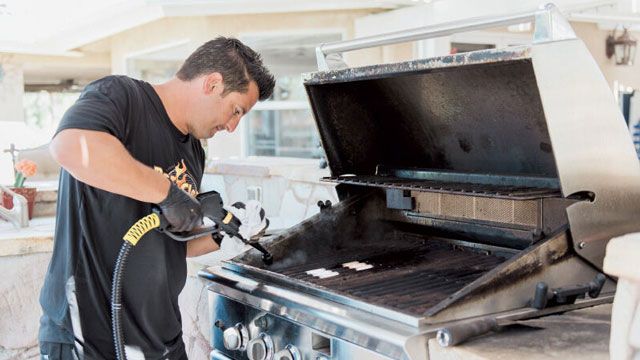
According to Bar-B-Clean’s franchise history profile, the concept traces back to 2009, when Bryan Weinstein opened his grill for the first time that year and found it covered in crusted food, mold, and grime. After spending hours scraping and degreasing, he decided there had to be a better solution for cleaning grills, especially given how heavily people rely on outdoor cooking.
What happened next is the kind of market discovery that often becomes a franchiseable business:
- Weinstein searched online and found very limited competition for professional grill cleaning, at least in his region.
- He researched best practices for steam cleaning and sterilizing grills, and worked with a chemist to develop a proprietary stainless-steel polish.
- He then operated the concept locally in Orange County, California, refining the process until it was repeatable.
That combination (clear consumer problem, limited direct competition, and a repeatable service process) is a classic foundation for a franchise model.
Launch and Early Business Development
Public franchise profiles describe Bar-B-Clean as being founded in 2011 and later expanding into franchising. The concept’s early growth appears to have focused on building a consistent service process built around:
- Biodegradable and non-toxic cleaning products
- Heavy degreasing and “deep clean” restoration
- Steam cleaning and sanitizing practices
- A finish/polish component for stainless steel restoration
From a customer standpoint, the value proposition is simple: grills are expensive, get dirty and potentially unsafe over time, and most owners don’t want to (or don’t properly) deep-clean them. Bar-B-Clean steps in as the specialist.
The Business Becomes a Franchise
A key milestone for any franchise system is moving from “a good business” to “a replicable system.” Bar-B-Clean’s franchising timeline is fairly clear in multiple sources:
- Bar-B-Clean worked with Franchise Marketing Systems to build, develop and define the franchise platform and system to be able to offer franchise units.
- The company was formed as a California corporation on December 17, 2012, and has offered franchises since March 2013.
That sequence makes sense:
- Build/validate the concept
- Formalize the corporate structure
- Develop franchise offering documents and begin awarding territories
Why Bar-B-Clean Franchises Well: What Makes the Model Scalable
Bar-B-Clean’s franchise pitch is built around a few core realities that are attractive to franchise buyers, especially those looking for a home service business that is not as operationally complex as many contractor trades.
A Niche Category with “White Space”
The brand repeatedly emphasizes “little to no competition” in the grill-cleaning niche. Whether competition varies by market, the larger idea is still powerful: franchisees aren’t fighting ten identical grill-cleaning companies in most cities.
Low Overhead and Mobile Operations
Bar-B-Clean highlights a low-overhead structure with no commercial office requirement and a simplified model that can be run with a vehicle and manageable equipment. Mobile service businesses often franchise well because they can scale territory-by-territory without requiring expensive real estate.
Protected, Demographic-Based Territories
Bar-B-Clean describes territories as built around approximately 75,000 households with a minimum income threshold (as stated in its franchise marketing materials). This speaks to a deliberate strategy: target markets where grill ownership and outdoor kitchens are common, which improves lead quality and customer value.
Lifestyle and Schedule Flexibility
The franchise sales messaging leans into a “lifestyle company” angle: outdoor work, local ownership, and scheduling flexibility. That positioning has helped many home service franchises grow quickly by attracting owner-operators seeking control over time and income.
What Bar-B-Clean Actually Sells to Customers
One reason franchise systems scale is when the service menu is easy to understand and easy to repeat. Bar-B-Clean’s consumer-facing site emphasizes a small set of core services:
- Grill cleaning
- Repairs and replacements
- Grill polish
- New grills (sales)
That mix creates multiple revenue streams:
- Immediate deep-clean jobs
- Follow-on maintenance
- Repair upsells (when a cleaning reveals issues)
- Replacement/sales referrals or add-ons
This is a smart model because it turns a single service call into a relationship, and relationships become recurring revenue.
Growth Through Franchising: How the Footprint Expanded
Bar-B-Clean’s most visible expansion engine has been franchising, and several sources show franchise outlet counts over time.
A 2025 franchise review (based on the brand’s FDD) reports the number of franchised outlets as:
- 23 outlets at the start and end of 2022
- 23 outlets at the start of 2023 and 28 outlets at the end of 2023 (net +5)
That indicates growth momentum starting to build as the system matured.
Other marketplace listings cite larger “total units” figures (which may include different definitions such as active territories vs operating outlets), so the cleanest directional data comes from FDD-based summaries showing year-to-year outlet changes.
The key takeaway isn’t just the number. It’s what the numbers suggest:
- The system sustained its base, then began adding new operators
- The model likely benefited from increased franchise recruitment activity
- The brand progressed into a stronger growth phase post-2022
Franchisee Profile and Community: Who the Brand Attracts
Bar-B-Clean’s franchise site emphasizes accessibility to owners “from all walks of life” and highlights a notable statistic: more than half of existing franchise owners are veterans, and the brand offers a 10% franchise fee discount for veterans.
This is meaningful because veteran franchise ownership is often correlated with:
- Disciplined execution
- Comfort with systems and procedures
- Strong customer service standards
- A desire for a business that can scale locally
Bar-B-Clean also markets to owners who are “sales & marketing savvy” and motivated to grow, another sign that the model expects franchisees to build local awareness through community outreach and partnerships, not just rely on corporate brand demand.
The Model’s “Go-To-Market” Strategy: Partnerships and Local Referrals
Like many home service franchises, Bar-B-Clean’s growth is tied to local relationships. One franchise sales channel emphasizes partnership opportunities with:
- Outdoor stores
- Grill retailers
- Local referral sources
This makes strategic sense. Retailers selling grills and outdoor kitchens have customers who need cleaning, maintenance, and repairs. A local Bar-B-Clean franchise becomes a natural “service partner” in that ecosystem.
It also supports a predictable, repeatable franchise playbook:
- Build partnerships
- Convert referrals
- Deliver high-quality service
- Generate reviews and recurring customers
- Scale into additional territory or staff
Financial and Operational Maturity: Signals from FDD-Based Summaries
While an FDD is the authoritative document for financial performance representations, public summaries indicate that Bar-B-Clean includes Item 19 performance representations and reports revenue and job data for groups of franchised and affiliate locations.
The “why” matters more than the specific numbers here:
- A franchisor that provides Item 19 representations is offering at least some performance transparency.
- Reporting job count and revenue per job suggests the model is tracked operationally like a route/service business (jobs, tickets, capacity), which is generally a good sign for scalable service franchising.
How the Brand Has Evolved as It Expanded
Bar-B-Clean’s evolution follows a common path for niche service franchises:
Phase 1: Validation and Process Refinement
The early years were about perfecting a repeatable cleaning/restoration process and proving customer demand in a local market.
Phase 2: Formal Franchise Rollout
The company’s corporate formation (2012) and franchising start (March 2013) reflect the shift to building a franchise platform.
Phase 3: Early Territory Expansion
As territories were sold, the system likely refined training, marketing playbooks, equipment packages, and support systems. This is typical franchise infrastructure that is invisible to customers but critical for growth.
Phase 4: Acceleration Through Franchise Recruitment
Outlet growth shown in 2023 (net increase) reflects the beginning of stronger scale momentum.
Why Bar-B-Clean is a Notable Franchise Case Study
From a franchising standpoint, Bar-B-Clean is interesting because it shows how a brand can scale by doing three things exceptionally well:
- Own a niche (grill cleaning/restoration)
- Standardize the process so it’s teachable and repeatable
- Create a franchise package that matches what service-business franchisees want: low overhead, protected territories, and a sales/marketing growth playbook
It’s also a reminder that “boring” or overlooked services can become powerful franchises when they solve a real problem and are built around a system.

Closing Summary
Bar-B-Clean began with a simple realization: grills get dangerously dirty, most people don’t want to deep-clean them, and there was very little specialized competition. That insight, combined with a repeatable steam-cleaning and restoration process tested in Southern California, became the foundation of a brand founded in 2011 that started franchising in 2013.
From there, Bar-B-Clean’s franchising growth has been driven by a low-overhead mobile model, protected territories, and a compelling niche service that can expand through community partnerships and referrals. Franchise outlet counts reported in FDD-based summaries show the system holding steady and then adding growth momentum into 2023.
For anyone studying franchising, Bar-B-Clean offers a clear lesson: you don’t need to invent a new industry to build a franchise system. You need to find a real problem, standardize the solution, and build a model that owners can execute repeatedly.